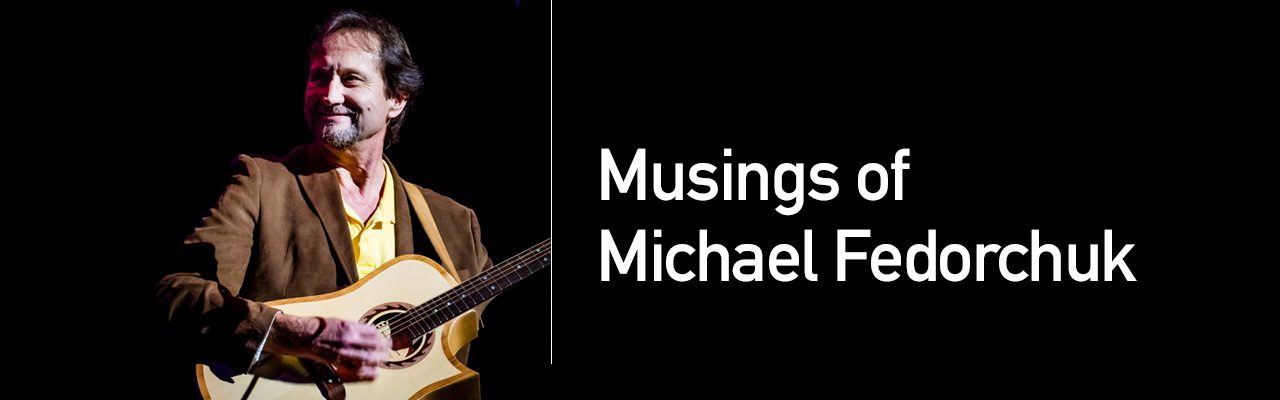
The number and range of memories that the words The Sixties evoke must be vast, and I still feel the impact of that age on me. Some exited that era with hopeful ideals while others became disenchanted with unfulfilled promises of a future where people could accept each other’s differences and live harmoniously in a diverse society. But I use this as the title for my first blog entry because I am in my sixties, and I would like to leave a written archive for those who come after me. For those I may never meet and who may wonder at who this guy was who stood at the family’s crossroads between one continent and another.
A first generation citizen of the US, my being the child of immigrants made my youth somewhat unique. In a nation of immigrants, my experience as the child of world travelers isn’t so uncommon, but as the son of parents who lived under the persecution of Russian communists and German fascists, my youth as spent in the romantic and idealistic days of The Sixties was at the least decidedly contradictory. After all, my parents chose to live in America, freedom’s home, an enchanted place of unlimited possibilities for those willing to work for it. And The Sixties is a time remembered for protests against America’s establishment. Somehow I navigated those treacherous waters, getting drenched perhaps, but without drowning.
As a teenager, I would leave my home and enter the world of America. A lively, interesting place where kids like me were expected to participate in sports, engage in social activities sponsored by schools or neighborhoods, and generally become immersed in the process of becoming an adult. Upon returning home, I entered the world of agrarian Ukraine. A harsh place where commands were given but rarely explained, expectations leveled but not clearly rationalized. Do this, do that, yes sir, no ma’am. A lot of the time it wasn’t much fun, and I found it easy to understand the concept of “generation gap” as was so often discussed at the time on TV and in classrooms.
I didn’t understand why my parents would not accept a girlfriend who wasn’t also a Ukrainian. So I rarely brought anyone home for them to meet. I didn’t know why my classmates could attend a school dance while I had to remain home. Some of my friends had jobs while I, as the youngest of three brothers, was somehow babied and smothered into a sheltered existence. I’ll not dwell on the over-mothering, over-parenting I have found to be pretty common among east European families – at least those in my experience – except to say that I made a parallel long ago between this and the over-governing and “strong leader” regimes of that part of the world. Suffice it to say that the dichotomy between what I was taught at home and what I learned in the world outside my yard was far reaching.
Generation gap. Culture gap.
But I did have help. What saved me at the time were my friends. My neighborhood was a crucible of ethnic families. Poles, Ukrainians, Italians and a few others sprinkled in. It made for wonderful arguments, discussions, fist fights, and camaraderie. We learned we were different and we learned we were alike. Most let go of their racism, sadly some never did. The Romantic, transcendentalist attitudes of the The Sixties helped, but imagine what it’s like to hear different versions of the truth. I knew from the experience of my parents that the only difference between the communists and fascists was the number and types of letters in their monikers. Each regime destroyed those who disagreed with it. Each regime lied to remain in power. Each regime excused the atrocities of their allies and denounced those of their enemies. Yet, thousands of people were dying in Viet Nam in an effort to oppose communism. Was this not a just war?
Those years presented difficult choices for me because I had to make sense in my own mind about what was right and what was wrong. They couldn’t both be right, could they? If communism was an atrocious dictatorship, why would American free thinkers be so opposed to the war? When I spoke to someone who’d experienced Russia’s atrocities, I was convinced his position was the correct one. A week later, when speaking to a student activist opposed to American involvement in Viet Nam, I would be convinced of the correctness of his position. A hard place for me to be. How to make sense of it?
Obviously, my own position was untenable. It simply would not do. Somehow I needed to find the truth. Perhaps to find my truth. So I read. A lot. And I found others with whom to speak. Some who had been in-country in Nam. Others who’d survived World War II as my own parents did. Slave laborers who’d been ripped from their homes never to see their families again. Sure, I never had any grandparents or aunts and uncles, but I had my Mom and Dad. And I couldn’t deny the reality of dictatorship or of war. Nor could I deny the morality and humanity of the message being shouted in the streets of America at the time and in the music of the age.
It took me a few years, but I came to a determination. I would examine each dilemma for factuality and morality. I would base my decisions on truth and ethics, recognizing that issues are far too complex to think that only one perspective can be correct. My touchstone became the truth, and my guiding thought was that no one is always right and no one always wrong. And this has been my strength ever since. It’s allowed me to disagree with dignity whether dealing with strangers, friends, associates, enemies, or family members.
So now I’m in my sixties, and as I reflect on how I got here (and so damn fast, too!), I recognize that I brought some of those sixties with me. In my music and behavior, my attitudes and appearance, I think I ultimately embraced much of what The Sixties were about. The kids in the streets weren’t wrong, they just didn’t see the whole picture. Nor were my parents wrong, they just did the best they could with the baggage they had. It’s also up to us to live in our times and try to see the whole picture. To try to make the best with whatever baggage we carry with us.
There’s a new gap in our society here in 2017, and not surprisingly, it also has to do with the truth. The same forces that lacerated the world 70 years ago have rebounded in a way few have foreseen. The misinformation that has inundated the western press has multiplied exponentially due to the informational gluttony spawned by the Internet and Social Media. That’s why I plan to devote the next few articles to the dangers I see present in American politics. I believe the current administration is flirting with danger in its approach to American policies abroad and domestic and with their romancing of Russia, the sponsor of disinformation in our media. Most importantly, this administration denies the truth.
We have a megalomaniac and narcissist in the White House. That’s new. We also have a liar in the White House. Welcome back to the The Sixties.
 Musings of Michael Fedorchuk